Numbered Resource Allocation
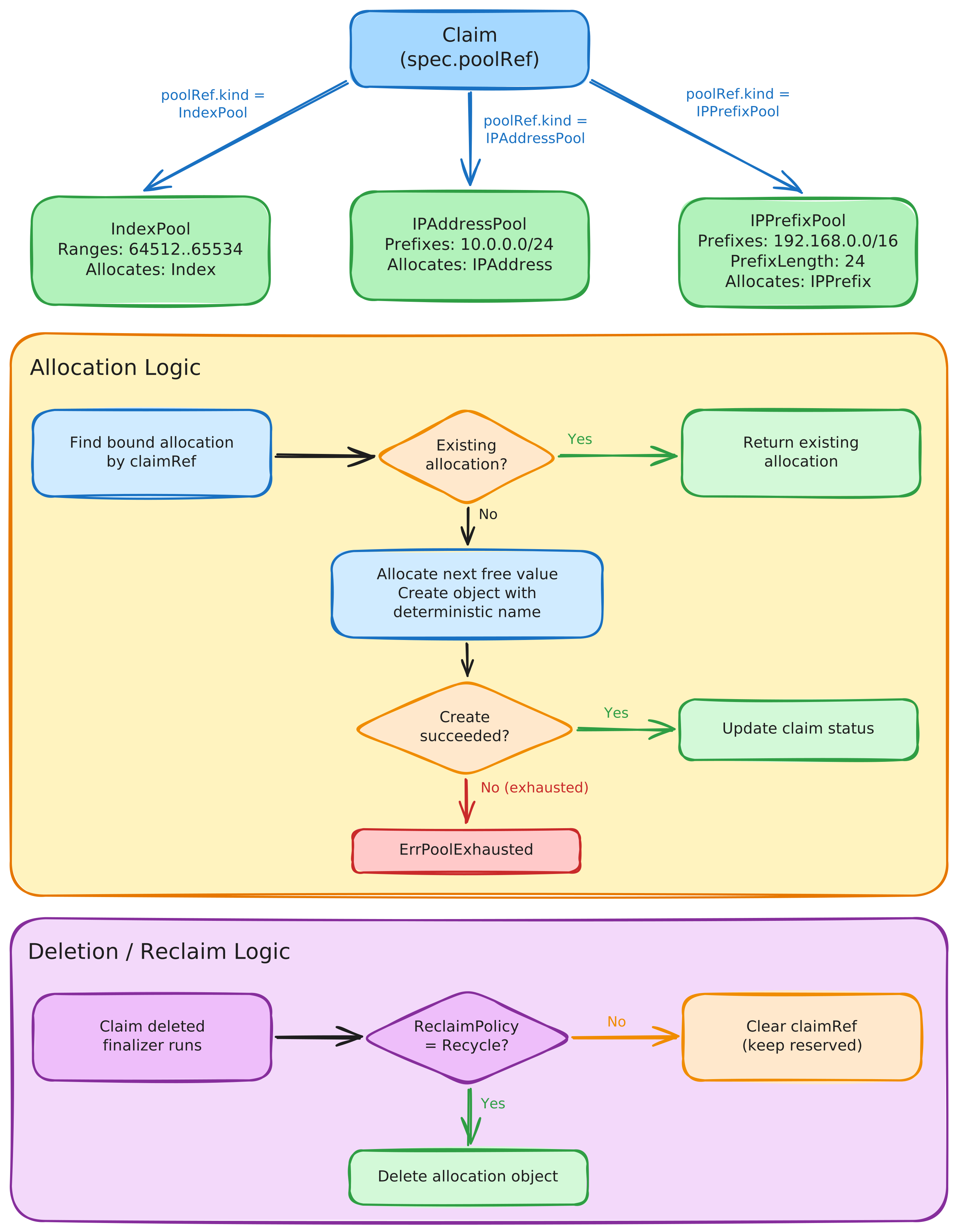
The Network Operator provides a pool-based allocation system for numbered resources such as indices (ASNs, VLAN IDs, route distinguishers), IP addresses, and IP prefixes. Resources are claimed via a Claim object that references a pool; the controller allocates a value by creating a dedicated allocation object (Index, IPAddress, or IPPrefix) and writes a reference back to the claim's status.
Pool Types
Three pool types are available, each targeting a different kind of resource:
| Pool Kind | Allocates | Allocation Object | Example use case |
|---|---|---|---|
IndexPool | int64 Index | Index | ASN, VLAN ID, VNI, Route Distinguisher |
IPAddressPool | Single IP Address | IPAddress | Loopback Address, Router ID |
IPPrefixPool | IP Prefix of a given length | IPPrefix | Subnet |
Concepts
Pool
A pool defines the set of values that can be allocated. Each pool type has a spec.reclaimPolicy field controlling what happens when a Claim is deleted:
Recycle(default) — the allocation object is deleted and the value becomes available for reuse.Retain— the allocation object'sclaimRefis cleared but the object itself is kept, reserving the value. The allocation can be rebound later using theallow-bindingannotation.
The example below creates an IndexPool covering the private-use ASN ranges defined in RFC 6996:
apiVersion: pool.networking.metal.ironcore.dev/v1alpha1
kind: IndexPool
metadata:
  name: asn-pool
spec:
  ranges:
    - 64512..65534
    - 4200000000..4294967294
For IP-based pools, sample manifests for all pool types are available in the repository:
config/samples/v1alpha1_indexpool.yamlconfig/samples/v1alpha1_ipaddresspool.yamlconfig/samples/v1alpha1_ipprefixpool.yaml
Pool Status
Each pool tracks the number of allocations (by counting allocation objects) and exposes utilisation counters:
$ kubectl get indexpools
NAME       ALLOCATED   AVAILABLE   AGE
asn-pool   3           True        10m
The Available condition is set to True while there is at least one free slot, and transitions to False (reason Exhausted) when all values have been allocated.
Allocation Objects
When a claim is reconciled, the controller creates a dedicated Kubernetes object — Index, IPAddress, or IPPrefix — with a deterministic name derived from the pool name and the allocated value (e.g. asn-pool-64512). This deterministic naming prevents duplicate allocations: if two controllers race for the same value, exactly one Create succeeds and the other retries with the next available value.
Each allocation object has:
spec.poolRef— a back-reference to the owning pool.spec.claimRef— identifies the boundClaimby name and UID.- A value field —
spec.index,spec.address, orspec.prefixdepending on the type.
The allocation type controllers validate each object's value against its pool's ranges/prefixes and set a Valid condition.
Sample manifests for allocation objects (useful for pre-provisioning) are available:
config/samples/v1alpha1_index.yamlconfig/samples/v1alpha1_ipaddress.yamlconfig/samples/v1alpha1_ipprefix.yaml
Claim
A Claim references a pool via spec.poolRef and, once reconciled, receives the allocated value in status.value and a reference to the allocation object in status.allocationRef. The controller guarantees idempotency: if an allocation object already exists with a matching claimRef (by name and UID), it is returned as-is without allocating a new value.
The example below creates a claim against the asn-pool defined above:
apiVersion: pool.networking.metal.ironcore.dev/v1alpha1
kind: Claim
metadata:
  name: leaf1-asn
spec:
  poolRef:
    kind: IndexPool
    name: asn-pool
Additional sample manifests for claims against each pool type are available in the repository:
The Allocated condition on the claim reflects the current state:
| Condition status | Reason | Meaning |
|---|---|---|
True | Allocated | A value has been successfully allocated. |
False | PoolExhausted | No values remain in the pool (terminal error). |
False | PoolNotFound | The referenced pool does not exist (yet). |
Allocation Result
Once allocated, status.value contains the string representation of the allocated resource and status.allocationRef references the allocation object:
$ kubectl get claim leaf1-asn -o jsonpath='{.status.value}'
64512

$ kubectl get claim leaf1-asn -o jsonpath='{.status.allocationRef.name}'
asn-pool-64512
Pre-provisioning and Rebinding
Instead of letting the controller pick the next available value, you can pre-provision an allocation object with a specific value. To allow a Claim to bind to it, the allocation object must:
- Have a
spec.claimRefwith thenameof the expected claim. - Carry the
pool.networking.metal.ironcore.dev/allow-bindingannotation.
When the claim controller finds an allocation whose claimRef.name matches but whose UID is stale (or empty), and the annotation is present, it updates the UID to bind the allocation to the current claim.
apiVersion: pool.networking.metal.ironcore.dev/v1alpha1
kind: Index
metadata:
  name: asn-pool-65001
  annotations:
    pool.networking.metal.ironcore.dev/allow-binding: "true"
spec:
  poolRef:
    apiVersion: pool.networking.metal.ironcore.dev/v1alpha1
    kind: IndexPool
    name: asn-pool
  index: 65001
  claimRef:
    name: leaf1-asn
This mechanism also enables rebinding after a claim is deleted and recreated with the same name — the retained allocation (with Retain reclaim policy) can be rebound if the allow-binding annotation is set.
TIP
The allow-binding annotation is only checked when the claimRef.name matches but the UID does not. A fully bound allocation (matching name and UID) is always returned directly.